GLB to STLHow to UseGLB VS STLFile InformationFile FeaturesHow it Works3D PrintingFAQOther GLB ToolsLatest News
to

Convert Your 3D Mesh/Model GLB Files to STL

Convert your 3D GLB to STL file that can then be opened in most 3D editing and 3D printing applications. Our tool works with all GLB (Graphics Language Transmission Format) files and will convert all 3D objects and geometry contained within the file to the STL (Standard Triangle Language) format that is compatible with most 3D printing software. Our lightning fast conversion tool can also batch-convert multiple GLB files; up to 200 files at a time can be converted.

To convert your GLB to STL, click the Upload button above and select the GLB file to convert. Once selected, the file will be converted to a 3D printable STL file and will be ready for download shortly afterwards. For more information about the GLB to STL conversion process, including what 3D model file features are supported, please see the conversion information section below for more information.

How to Convert your GLB to STL Online?

Here are two simple steps to convert your GLB to STL.

Upload a GLB File

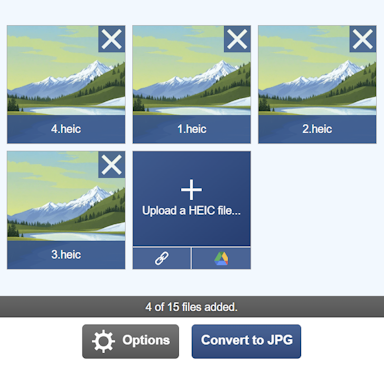
Click the "Upload a GLB File" button and select a GLB to upload. The maximum file size is 100MB.

Download your STL File

Click the download link once completed to receive your STL file.

A Comparison of GLB and STL File Formats

Here we will look at both the GLB and STL file formats and compare their features to try to work out what format is best to use for a given situation. Before we begin, if you're not familiar with 3D modeling and the terminology behind it, we thoroughly recommend this great article that explains 3D modeling concepts and the terminology that goes with it.

Structure

To get going, we will look at how both formats store 3D model data. Let's start with the GLB format, which is a modern 3D modeling file format that supports all the features you could ask of a format. Due to its mix of binary and JSON data storage, it is also a compact, easily distributable, and extendable format.

Moving on to the STL format, which is far less capable than the GLB format in that it is a simple, fixed format for storing triangles. That's it; other than some obscure customized versions of STL that allow limited material color to be applied to the model triangles, storing a triangulated 3D mesh is all you get with the STL format. STL files come in either text or binary formats, with the binary format preferred due to the large file sizes of 3D models stored in the text version.

Supported Material

GLB files support model materials, whether they be plain color materials or textured materials; both types are supported. STL files, on the other hand, do not support materials or textures at all. With the GLB format, materials and textures are integral to the file format and are stored within the main file along with the other 3D model data and support ambient, diffuse, and specular colors and textures in addition to bump maps.

A textured 3D model of Earth in GLB format

A textured 3D model of Earth in GLB format

A simple set of 3D objects in STL format

A simple set of 3D objects in STL format

A textured chair stored in GLB format

A textured chair stored in GLB format

Editing

Given its support for complex materials and animations, the GLB format has become increasingly popular in recent years and can be used in many 3D editing applications. The STL format, on the other hand, has been around much longer than the GLB format and is supported by most 3D modeling applications, and crucially, it is also supported by most 3D printing slicer software.

File Size

The GLB format stores data in a binary format, making it an efficient 3D model storage medium with any additional texture files included in the same file package. For STL files, these can be either text or binary in format. Due to the inefficiency of representing 3D geometry as text, choosing the binary format is advisable for larger models. As STL files do not support textures, you will lose any model texture information when saving a 3D model in the STL format.

Due to the way that STL files define the triangles that make up a mesh, the data will be larger in the STL format than the equivalent mesh saved in the GLB format. For STL files, we have a tool to compress the 3D data within an STL file to help reduce the size without losing any detail in your 3D model.

Summary

As the GLB format is a more modern format and supports materials, textures, animations, and much more, storing your models in the GLB format is most likely the best option; the only reason to save a model to the STL format is if you are intending to 3D print the model, in which case you may want to consider saving to the more modern 3MF format which is supported by many 3D printing applications and supports materials, textures, and data specific to 3D printing.
File Format Information for GLB to STL

ExtensionGLB
Full NameGraphics Language Transmission Format
Type3D Model
Mime Typemodel/gltf-binary
FormatBinary
ToolsGLB Converters, 3D Model Voxelizer, Create GLB Animation, GLB Asset Extractor, Text to GLB, GLB Viewer
Open WithBlender, MeshLab

Description

The GLB file format, which can also have the GLTF file extension depending on whether the content is binary or text/JSON, is a 3D file format used to describe 3D worlds and, as such, contains geometric data such as vertices, faces, normals, animations, and other 3D scene-related data.

The format, described by its creators as the "JPEG of 3D", has gained in popularity and is supported by a wide range of 3D modeling applications such as Blender and MeshLab. The GLB format is an open standard that is maintained by the Khronos Group.

GLB Notes

If your GLB file contains texture files and other texture-related data, these will be included in the conversion process.

Supported Features

  • V2.0 and above files only
  • Mesh geometry
  • Materials
  • Textures

Extensions

  • Draco Compression (KHR_draco_mesh_compression)
  • Mesh Quantization (KHR_mesh_quantization)
  • Specular Glossiness Materials (KHR_materials_pbrSpecularGlossiness)
  • Specular Materials (KHR_materials_specular)
  • IOR Materials (KHR_materials_ior)
  • Meshopt Compression (EXT_meshopt_compression)

Unsupported Features

  • Animations
ExtensionSTL
Full NameStandard Triangle Language
Type3D Model
Mime Typeapplication/vnd.ms-pki.stl
FormatText & Binary
ToolsSTL Converters, 3D Model Voxelizer, Create STL Animation, Compress STL, Text to STL, STL Viewer
Open WithBlender, Daz Studio, MeshLab, CAD Assistant

Description

The STL file format has its roots in the 1980's and is the native file format for 3D Systems stereolithography CAD software. The format defines a triangulated mesh with vertices and faces and is a popular format for sharing 3D printable model files.

There were several formats that attempted to extend the STL format, namely SolidView and VisCAM, whose formats included limited 15-bit color information for each mesh face, which is often ignored by most modern 3D software. The STL format can be either text or binary; our tools will support both formats.

STL Notes

The standard STL file format does not support colored faces, vertices, or texture information. The STL file generated by the tool will contain only raw mesh/triangle data by default, which is perfect for 3D printing.

The tool also has the option to save the file to one of the non-standard formats that support colored faces, such as VisCAM and SolidView which is perfect if you want to further process the STL in software that supports these formats.

Supported Features

  • Mesh geometry
  • Face colors via the VisCAM and SolidView formats
  • Binary and text versions are supported

Comparing GLB and STL Features


GLB Features

  • Mesh Geometry (Vertices and Faces)
  • Vertex Normals
  • Face Normals
  • Vertex Colors
  • Face Materials (Excluding textures)
  • Textures
  • Point Cloud
  • Multiple Objects Per File
  • Object Transforms (Translation, Rotation, and Scale)
  • Bones/Joints
  • Animations
  • Suitable for 3D Printing

STL Features

  • Mesh Geometry (Vertices and Faces)
  • Vertex Normals
  • Face Normals
  • Vertex Colors
  • Face Materials (Excluding textures)
  • Textures
  • Point Cloud
  • Multiple Objects Per File
  • Object Transforms (Translation, Rotation, and Scale)
  • Bones/Joints
  • Animations
  • Suitable for 3D Printing

Converting GLB to STL, How Does It Work?

Converting from the GLB file format to STL can be a complex process, and any tool used for this conversion process needs to be able to handle a variety of data conversion tasks as well as identify any defects within the 3D model and fix them. Here we will explain the conversion process used by our tool to accurately convert your GLB file to a valid STL 3D model. Let's start with the conversion process, which involves the following steps:

Step 1: Read the Source GLB File

In its simplest form, an GLB file is a binary data file containing 3D data such as vertices, faces, normals, and more. When combined, these make up the 3D model you see on your screen.

When our tool reads this 3D data, all we are interested in are the vertices, faces, and normals, as this is the only data that can be accurately converted into the final STL file.

The GLB file can contain other data, such as material definitions and textures, that describe how a particular set of 3D geometry should be rendered. As we are creating an STL file, which does not support materials and textures, we will be ignoring this data if it is present in the GLB file.

For more information regarding the GLB file format, please see this great article that goes into a lot of detail explaining the GLB format.

Step 2: Process File Data

With the GLB file data read, our tool generates an internal representation of the full 3D model and will attempt to fix any geometry issues encountered. Along with repairing any issues with the 3D model, the tool will remove any duplicated vertices and prepare the model for exporting to the STL format.

Step 1: Read the Source GLB File

Step 3: Saving to the STL Format

The STL format has been around for many years and has become not only a standard format for storing and transmitting 3D models but also a standard format for 3D printing, something we have talked about previously. STL files can be opened in most modern 3D editing applications without further processing.

To enable the saving of the model, our tool now needs to take the in-memory 3D model we have created in step 2 and convert this to the STL format. As the STL format supports only simple triangles with a single directional normal, if your GLB contains vertex normals, these will be recalculated into a single-face normal. To ensure an efficient file size, our tool will always save any STL file in its binary format.

Converting Your GLB File for 3D Printing

Software used to prepare a 3D model file for printing, which is also known as 3D slicer software, cannot usually open GLB files. This is because slicer software authors will support the most common formats used for 3D printing, such as STL and 3MF and do not have the resources to implement 3D object parsers for all the possible 3D formats that are out there.

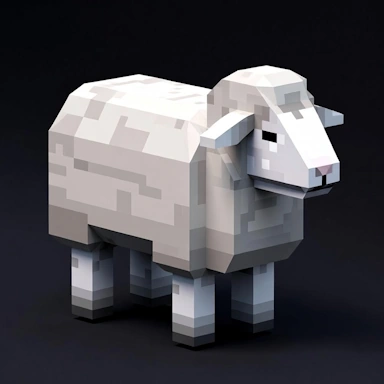
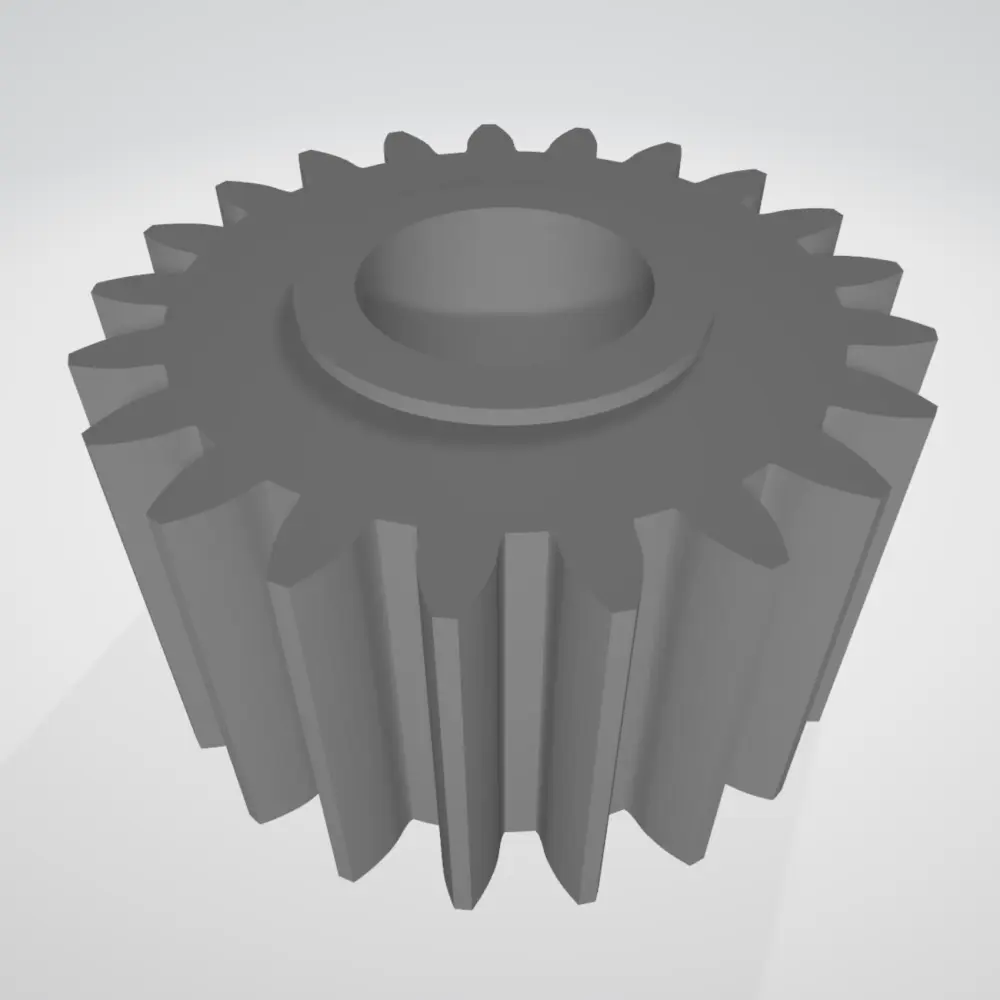
A small cog in the GLB format

A small cog in the GLB format

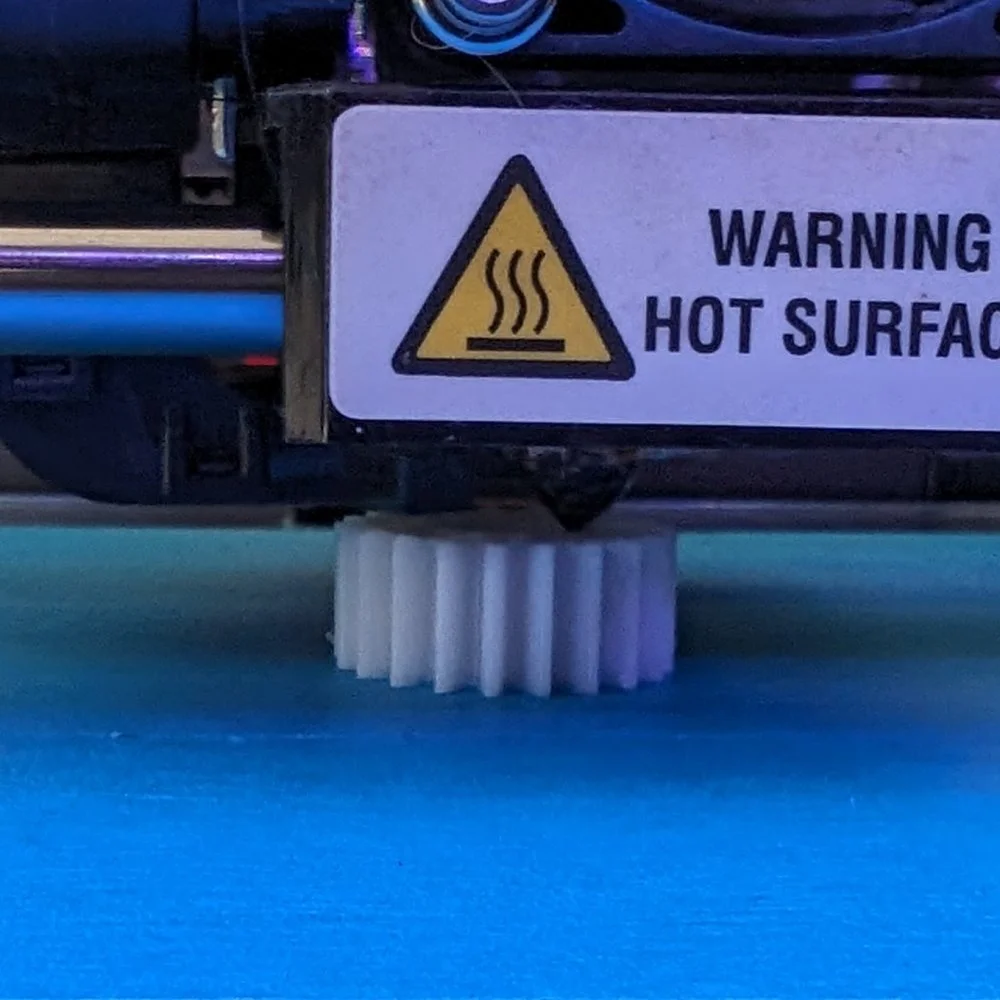
The cog in a Replicator 3D printer

The cog in a Replicator 3D printer

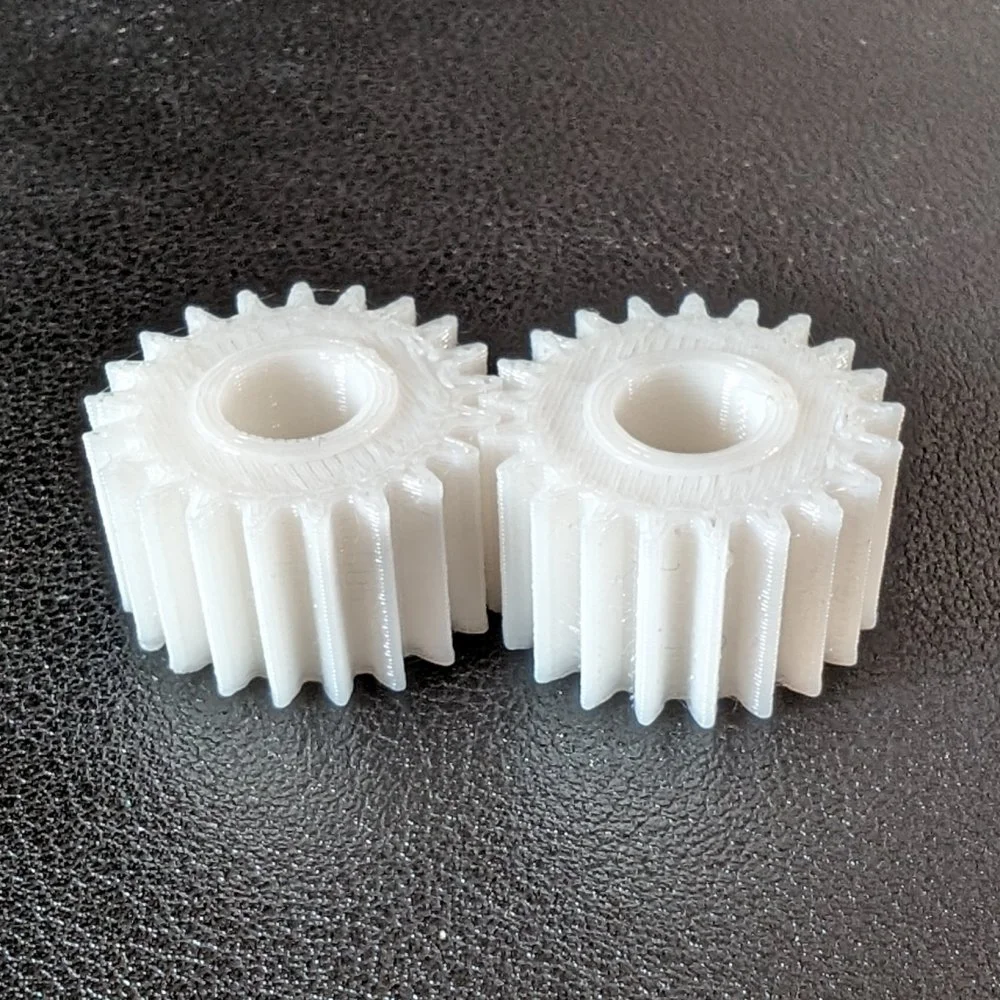
The completed 3D printed cog

The completed 3D printed cog

Slicer software can, however, handle files formatted to the STL specification. This is because STL, although predating the 3D printing revolution and lacking in some of the features of modern formats, has found almost universal adoption as the format of choice for distributing 3D printable models. Our GLB to STL conversion tool can convert your GLB file into an STL file suitable for loading into the 3D slicer software of your choice. As STL files do not support material colors or textures, our converter will not process these, resulting in a single STL file suitable for use with most 3D slicer software.

Frequently Asked Questions

What is an STL file?

The STL file format describes an unstructured triangulated surface of the triangles using a 3D Cartesian coordinate system. STL files do not contain any scale information, and the units are arbitrary. We have a more detailed description of an STL file which can be found on our STL file page.

What STL formats can I convert to?

Our tool will save all STL files in binary format. Optionally, our tool will allow you to save to the non-standard color STL format.

How does ImageToStl.com differ from other GLB file conversion websites?

Many 3D file conversion websites use the same off-the-shelf components to convert files, these often lack features and full GLB file compatibility. Our bespoke file conversion tools offer full GLB file compatibility and have been developed in-house by a team of developers, some of whom have over 30 years of experience working with 3D graphics file formats, meaning our tools will convert your GLB file quickly and accurately with maximum compatibility.

I have several GLB files; can I batch convert my GLB to STL?

Yes! Our GLB tool supports full batch conversions. You can upload up to 200 GLB files at a time. Our tool will convert them all as quickly as possible. Once completed, you can either download the STL files individually or download them all in a single ZIP file.

How can I convert my GLB file to STL?

First click the "Upload..." button, and select your GLB file to upload. You can also drag and drop your file onto the tool. Once your file is selected, you can set any configuration options. When the GLB to STL conversion has completed, you can download your STL file straight away.

How long does it take to convert my GLB to STL?

We aim to process all GLB to STL conversions as quickly as possible, this usually takes around 5 seconds but can be more for larger more complex files so please be patient.

How accurate is the GLB to STL conversion?

We aim to create the most accurate conversions with our tools. Our tools are under constant development with new features and improvements being added every week.

Is it safe to convert my GLB to STL on ImageToStl.com?

Yes, of course! We do not store the GLB file you submit to us. The resulting STL file, once created, is stored for 4 hours after upload; after this time it is deleted, and the short-term download link will stop working. You can create a long-term download Url with most tools that will ensure the file is retained for 24 hours, allowing you to download the file when convenient. Our tools also come with a Delete button, allowing you to delete the file immediately.

Do I need a high-spec. computer to use the GLB to STL converter?

No. All our conversion tools process your GLB file on our dedicated conversion servers, meaning you can use our tools on low-spec computers, laptops, tablets, and mobile devices and receive your converted STL file quickly.

Can I convert my GLB to STL on Windows, Linux, Android, iOS or Mac OS?

Yes! Our GLB to STL tool will run on any system with a modern web browser. No specialist software is needed to run any of our conversion tools.

What if I am using an Ad Blocker, will that affect things?

Yes. Although you can use an Ad Blocker, if you like our GLB conversion tool please consider white-listing our website. When an Ad Blocker is enabled there are some conversion limits and some settings may not be available when using our tools. Processing/conversion and download times will also be longer.

Can I get support with converting my GLB to STL?

Yes. When you have converted your GLB to STL, there is a "Feedback" option that you can use to let us know of any issues you encountered when converting your file.

© 2025 ImageToStl. Convert your PNG and JPG Files to 3D STL files.