GCODE to STLHow to UseGCODE VS STLFile InformationFile FeaturesFAQOther GCODE ToolsLatest News
to

Convert Your 3D Mesh/Model GCODE Files to STL

Convert your 3D printer GCODE to STL file that can then be opened in most 3D editing and 3D printing applications. Our tool works with most GCODE files and will attempt to recreate the original 3D model in the STL (Standard Triangle Language) format that is compatible with most 3D editing and printing software. Our conversion tool can also batch-convert multiple GCODE files; up to 200 files at a time can be converted.

To convert your GCODE to STL, click the Upload button above and select the GCODE file to convert. Once selected, the file will be converted to an editable STL file and will be ready for download shortly afterwards. For more information about the GCODE to STL conversion process, please see the conversion information section below for more information.

How to Convert your GCODE to STL Online?

Here are two simple steps to convert your GCODE to STL.

Upload a GCODE File

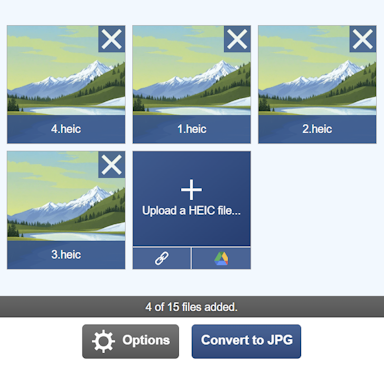
Click the "Upload a GCODE File" button and select a GCODE to upload. The maximum file size is 100MB.

Download your STL File

Click the download link once completed to receive your STL file.

A Comparison of GCODE and STL File Formats

Here we will look at both the GCODE and STL file formats and compare their features to try to work out what format is best to use for a given situation. Before we begin, if you're not familiar with 3D modeling and the terminology behind it, we thoroughly recommend this great article that explains 3D modeling concepts and the terminology that goes with it.

Structure

GCODE isn't strictly speaking a 3D model format in the traditional sense; rather, it is a format that is used to describe to 3D printers how to build an object by providing low-level instructions such as "move to x,y", "begin extruding", "move to x+10,y", "end extruding" etc. If a GCODE file is opened in a text editor, there will be hundreds, if not thousands, of these commands.

The STL format, on the other hand, is a 3D mesh format that is a simple, fixed format for storing triangles. STL files come in either text or binary formats, with the binary format preferred due to the large file sizes of 3D models stored in the text version.

Supported Material

GCODE files do not directly contain material information; they do, however, contain commands to tell the 3D printer to switch filament, allowing objects to be printed using more than one color/type of filament. With STL files there is no official support for materials; all mesh data contained within an STL file must be the same color.

A sample GCODE file preparing to 3D print

A sample GCODE file preparing to 3D print

A sample GCODE file preparing to 3D print

A sample GCODE file preparing to 3D print

A plain STL file

A plain STL file

Editing

GCODE files are not designed to be edited directly; any edits should be applied to the source 3D model file and re-exported to the GCODE format. The STL format, on the other hand, is easily edited and is supported by most 3D modeling applications, and crucially, it is also supported by most 3D printing slicer software, making it the perfect format for generating a GCODE file from.

File Size

With GCODE files, they can be either text or binary, though the text format is generally the more common type. Within the GCODE text is a list of commands, and due to the number of commands needed for even a simple 3D model, these files can become very large. STL files can also be binary or text, and the binary format is usually the most common type. The contents of an STL file are quite simple; a 3D model is composed of a list of triangles, each of which is described using 3 vertices. Compared to other 3D file formats such as GLB, this is an inefficient way to store the data; however, it means it is easy for 3D modeling and slicer applications to implement support for the STL format.

Summary

For sending a 3D model directly to a 3D printer without needing a 3D slicer program, then GCODE is the preferred format; all other 3D formats, including STL, will need to be run through a 3D slicing application before 3D printing.


File Format Information for GCODE to STL

ExtensionGCODE
Full NameG-code
Type3D Model/Point Cloud
Mime Typetext/plain
FormatText
ToolsGCODE Converters, 3D Model Voxelizer, Create GCODE Animation, GCODE Viewer

Description

The GCODE file format is the native file format used by CNC machines and 3D printers as a means to coordinate the movement and actions of these machines. In the case of FDM 3D printers, the file contains commands to move the extruder to specific locations and the rate with which to extrude the plastic filament onto the build plate.

A GCODE is a plain text file containing lists of commands, with each command appearing on a new line within the file. These commands control how the CNC machine or 3D printer operates and creates a particular 3D object. GCODE is a standard format and is usually generated by 3D printing slicer software from standard 3D model formats such as STL.

ExtensionSTL
Full NameStandard Triangle Language
Type3D Model
Mime Typeapplication/vnd.ms-pki.stl
FormatText & Binary
ToolsSTL Converters, 3D Model Voxelizer, Create STL Animation, Compress STL, Text to STL, STL Viewer
Open WithBlender, Daz Studio, MeshLab, CAD Assistant

Description

The STL file format has its roots in the 1980's and is the native file format for 3D Systems stereolithography CAD software. The format defines a triangulated mesh with vertices and faces and is a popular format for sharing 3D printable model files.

There were several formats that attempted to extend the STL format, namely SolidView and VisCAM, whose formats included limited 15-bit color information for each mesh face, which is often ignored by most modern 3D software. The STL format can be either text or binary; our tools will support both formats.

STL Notes

The standard STL file format does not support colored faces, vertices, or texture information. The STL file generated by the tool will contain only raw mesh/triangle data by default, which is perfect for 3D printing.

The tool also has the option to save the file to one of the non-standard formats that support colored faces, such as VisCAM and SolidView which is perfect if you want to further process the STL in software that supports these formats.

Supported Features

  • Mesh geometry
  • Face colors via the VisCAM and SolidView formats
  • Binary and text versions are supported

Comparing GCODE and STL Features


GCODE Features

  • Mesh Geometry (Vertices and Faces)
  • Vertex Normals
  • Face Normals
  • Vertex Colors
  • Face Materials (Excluding textures)
  • Textures
  • Point Cloud
  • Multiple Objects Per File
  • Object Transforms (Translation, Rotation, and Scale)
  • Bones/Joints
  • Animations
  • Suitable for 3D Printing

STL Features

  • Mesh Geometry (Vertices and Faces)
  • Vertex Normals
  • Face Normals
  • Vertex Colors
  • Face Materials (Excluding textures)
  • Textures
  • Point Cloud
  • Multiple Objects Per File
  • Object Transforms (Translation, Rotation, and Scale)
  • Bones/Joints
  • Animations
  • Suitable for 3D Printing

Frequently Asked Questions

What is an STL file?

The STL file format describes an unstructured triangulated surface of the triangles using a 3D Cartesian coordinate system. STL files do not contain any scale information, and the units are arbitrary. We have a more detailed description of an STL file which can be found on our STL file page.

What STL formats can I convert to?

Our tool will save all STL files in binary format. Optionally, our tool will allow you to save to the non-standard color STL format.

How does ImageToStl.com differ from other GCODE file conversion websites?

Many 3D file conversion websites use the same off-the-shelf components to convert files, these often lack features and full GCODE file compatibility. Our bespoke file conversion tools offer full GCODE file compatibility and have been developed in-house by a team of developers, some of whom have over 30 years of experience working with 3D graphics file formats, meaning our tools will convert your GCODE file quickly and accurately with maximum compatibility.

I have several GCODE files; can I batch convert my GCODE to STL?

Yes! Our GCODE tool supports full batch conversions. You can upload up to 200 GCODE files at a time. Our tool will convert them all as quickly as possible. Once completed, you can either download the STL files individually or download them all in a single ZIP file.

How can I convert my GCODE file to STL?

First click the "Upload..." button, and select your GCODE file to upload. You can also drag and drop your file onto the tool. Once your file is selected, you can set any configuration options. When the GCODE to STL conversion has completed, you can download your STL file straight away.

How long does it take to convert my GCODE to STL?

We aim to process all GCODE to STL conversions as quickly as possible, this usually takes around 5 seconds but can be more for larger more complex files so please be patient.

How accurate is the GCODE to STL conversion?

We aim to create the most accurate conversions with our tools. Our tools are under constant development with new features and improvements being added every week.

Is it safe to convert my GCODE to STL on ImageToStl.com?

Yes, of course! We do not store the GCODE file you submit to us. The resulting STL file, once created, is stored for 4 hours after upload; after this time it is deleted, and the short-term download link will stop working. You can create a long-term download Url with most tools that will ensure the file is retained for 24 hours, allowing you to download the file when convenient. Our tools also come with a Delete button, allowing you to delete the file immediately.

Do I need a high-spec. computer to use the GCODE to STL converter?

No. All our conversion tools process your GCODE file on our dedicated conversion servers, meaning you can use our tools on low-spec computers, laptops, tablets, and mobile devices and receive your converted STL file quickly.

Can I convert my GCODE to STL on Windows, Linux, Android, iOS or Mac OS?

Yes! Our GCODE to STL tool will run on any system with a modern web browser. No specialist software is needed to run any of our conversion tools.

What if I am using an Ad Blocker, will that affect things?

Yes. Although you can use an Ad Blocker, if you like our GCODE conversion tool please consider white-listing our website. When an Ad Blocker is enabled there are some conversion limits and some settings may not be available when using our tools. Processing/conversion and download times will also be longer.

Can I get support with converting my GCODE to STL?

Yes. When you have converted your GCODE to STL, there is a "Feedback" option that you can use to let us know of any issues you encountered when converting your file.

© 2025 ImageToStl. Convert your PNG and JPG Files to 3D STL files.