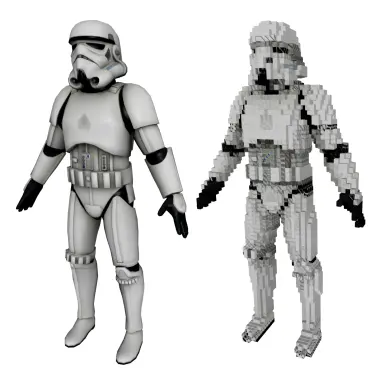
Our free and fast tool will convert FBX (Autodesk Filmbox) 3D model files to GLB files that can then be edited further in most modern 3D editing packages. Our conversion tool can simultaneously batch-convert up to 200 FBX files, saving you time if you have many files to convert. If your FBX file contains model textures, these will be incorporated into the final GLB download, ensuring an accurate conversion.
To convert your FBX file, click the Upload button above and select the file to convert. Once selected, the file will be converted to a GLB file and will be ready for download shortly afterwards. For more information about the FBX to GLB conversion process, see the conversion information section below.
Here we will look at both the FBX and GLB file formats and compare their features to try to work out what format is best to use for a specific situation. If you are not familiar with 3D modeling and the terminology behind it, we recommend this great article that explains 3D modeling concepts and the terminology that goes with it.
When looking at both file formats and comparing the features, there is not much to split these two formats. Both FBX and GLB support all the usual 3D elements: vertices, faces, materials, textures, and animations.
How each format stores these internally is obviously different, with the FBX format using proprietary binary and text formats and GLB using a more open format based on JSON, which is used to describe the element structure and binary to efficiently store the raw geometry data.
Both FBX and GLB files support model materials, whether they be plain color materials or textured materials; both types are supported. Both formats support textures, which can be either embedded within the file or linked to as external files. When linking textures to either an FBX or GLB file, it is important to include these when using any of our converters to ensure a full and accurate conversion.
Both formats support ambient, diffuse, and specular colors and textures in addition to bump maps.
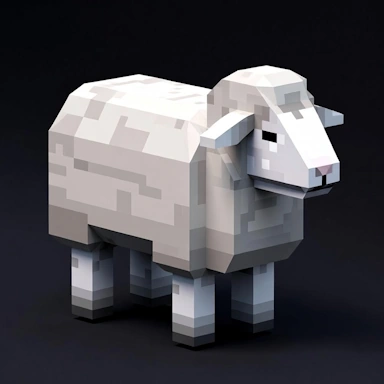
The soldier model was saved as an GLB file with textures
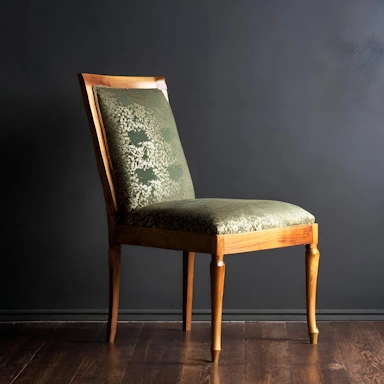
An animated FBX file from mixamo.com
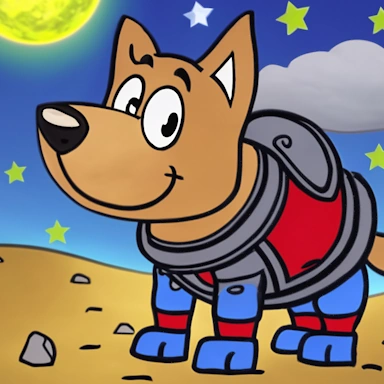
A textured 3D model of Earth
FBX and GLB enjoy widespread support amongst 3D modeling applications, with the GLB format edging ahead in recent years, mainly due to its open format and feature set.
When comparing file sizes, there is not much to split the two formats. Both store data in binary format, and both support internal compression techniques to reduce the size of the 3D geometry data. As the majority of the size of a fully textured FBX and GLB is given to the image files, the overall file size is very much dictated by the chosen image format.
When trying to choose between the two formats, the GLB format comes out on top. It is a modern and evolving 3D format that enjoys more support than the FBX format.

| Extension | FBX |
| Full Name | Autodesk Filmbox |
| Type | 3D Model |
| Mime Type | application/octet-stream |
| Format | Text & Binary |
| Tools | FBX Converters, 3D Model Voxelizer, Create FBX Animation, FBX Asset Extractor, Text to FBX, FBX Viewer |
| Open With | Blender, MeshLab |
The FBX format by AutoDesk was originally developed by Kaydara in the 1990s as a means to store 2D or 3D content with motion data. It has evolved over the years to become a widely used format by 3D modeling applications such as Blender, 3D Studio Max, and others due to its 3D animation capabilities.
The format is used to contain 3D models, which include vertices, faces, and other 3D geometry along with animation data. The format is proprietary; however, there is a publicly available API to use for development purposes. The file contents can be either text or binary, and work has been carried out by the Blender Foundation to document the format.
If your FBX file contains texture files and other texture-related data, these will be included in the conversion process.
| Extension | GLB |
| Full Name | Graphics Language Transmission Format |
| Type | 3D Model |
| Mime Type | model/gltf-binary |
| Format | Binary |
| Tools | GLB Converters, 3D Model Voxelizer, Create GLB Animation, GLB Asset Extractor, Text to GLB, GLB Viewer |
| Open With | Blender, MeshLab |
The GLB file format, which can also have the GLTF file extension depending on whether the content is binary or text/JSON, is a 3D file format used to describe 3D worlds and, as such, contains geometric data such as vertices, faces, normals, animations, and other 3D scene-related data.
The format, described by its creators as the "JPEG of 3D", has gained in popularity and is supported by a wide range of 3D modeling applications such as Blender and MeshLab. The GLB format is an open standard that is maintained by the Khronos Group.
If your original model file contains texture images and other texture-related data, these will be included in the final GLB file.
Converting from the FBX file format to GLB can be a complex process, and any tool used for this conversion process needs to be able to handle a variety of data conversion tasks as well as identify any defects within the 3D model and fix them. Here we will explain the conversion process used by our tool to accurately convert your FBX file to a valid GLB 3D model. Let's start with the conversion process, which involves the following steps:
In its simplest form, an FBX file can be either a plain text or binary file containing 3D data such as vertices, faces, normals, and more. When combined, these make up the 3D model you see on your screen.
When our tool reads this 3D data, all we are interested in are the vertices, faces, normals, materials, and textures, as this is the only data that can be accurately converted into the final GLB file.
The FBX file can contain data such as material definitions and textures that describe how a particular set of 3D geometry should be rendered. As we are creating an GLB file, which supports both materials and textures, our tool will attempt to load any materials and textures present in the FBX file.
For more information regarding the FBX file format, please see this great article that goes into a lot of detail explaining the FBX format.
With the FBX file data read, our tool generates an internal representation of the full 3D model and will attempt to fix any geometry issues encountered. Along with repairing any issues with the 3D model, the tool will remove any duplicated vertices and prepare the model for exporting to the GLB format.
With the conversion process entering its final stages, our tool now needs to take the in-memory 3D model we have created in step 2 and convert it to the GLB format.
The completed GLB file will contain any textures that were present in the original FBX file, these will be embedded within the GLB file. Depending on the original texture format, these textures will be saved in either PNG or JPG format. If the original format was neither of these, for example, if your model contained a texture in the TGA format, it will be converted to a PNG.
Our tool can read binary FBX versions 7.0 and above and text formatted FBX files version 6.4 and above. Please ensure your FBX version meets these requirements before uploading.
Yes! Our FBX tool supports full batch conversions. You can upload up to 200 FBX files at a time. Our tool will convert them all as quickly as possible. Once completed, you can either download the GLB files individually or download them all in a single ZIP file.
First click the "Upload..." button, and select your FBX file to upload. You can also drag and drop your file onto the tool. Once your file is selected, you can set any configuration options. When the FBX to GLB conversion has completed, you can download your GLB file straight away.
We aim to process all FBX to GLB conversions as quickly as possible, this usually takes around 5 seconds but can be more for larger more complex files so please be patient.
We aim to create the most accurate conversions with our tools. Our tools are under constant development with new features and improvements being added every week.
Yes, of course! We do not store the FBX file you submit to us. The resulting GLB file, once created, is stored for 4 hours after upload; after this time it is deleted, and the short-term download link will stop working. You can create a long-term download Url with most tools that will ensure the file is retained for 24 hours, allowing you to download the file when convenient. Our tools also come with a Delete button, allowing you to delete the file immediately.
No. All our conversion tools process your FBX file on our dedicated conversion servers, meaning you can use our tools on low-spec computers, laptops, tablets, and mobile devices and receive your converted GLB file quickly.
Yes! Our FBX to GLB tool will run on any system with a modern web browser. No specialist software is needed to run any of our conversion tools.
Yes. Although you can use an Ad Blocker, if you like our FBX conversion tool please consider white-listing our website. When an Ad Blocker is enabled there are some conversion limits and some settings may not be available when using our tools. Processing/conversion and download times will also be longer.
Yes. When you have converted your FBX to GLB, there is a "Feedback" option that you can use to let us know of any issues you encountered when converting your file.
© 2025 ImageToStl. Convert your PNG and JPG Files to 3D STL files.